
Truck Awareness Campaign

About the campaign

Parklife Metro’s road safety campaign is a long-term initiative running for the duration of the Sydney Metro – Western Sydney Airport project. It is designed to help light vehicle drivers share the road safely with heavy vehicles, with a particular focus on vulnerable drivers such as learner (L plate) and provisional (P plate) drivers.

Why trucks need more space

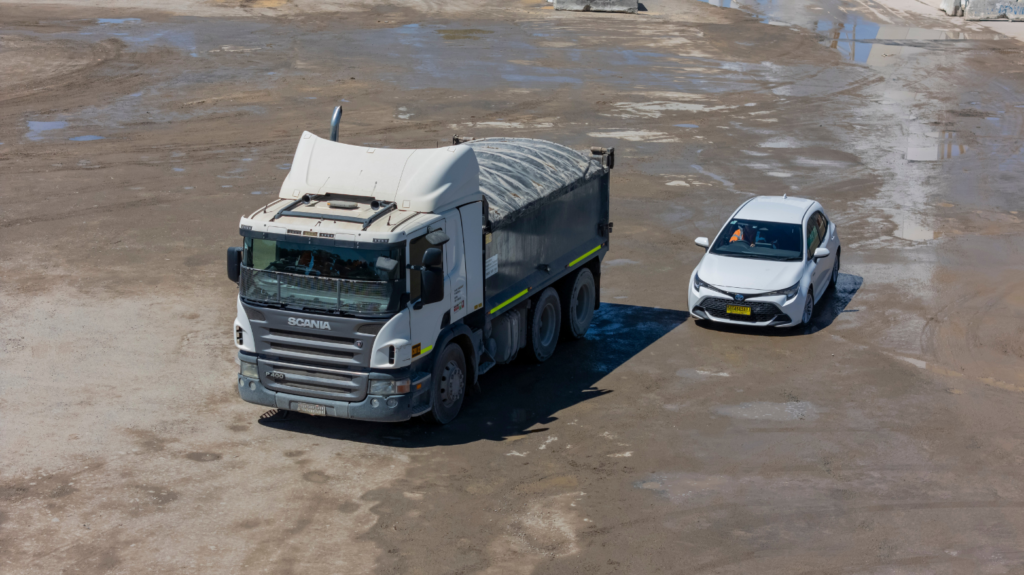
Driving near trucks requires extra awareness, as small mistakes can lead to serious consequences. Trucks have much larger blind spots than many drivers realise, if you cannot see the truck driver in their mirrors, there is a chance they cannot see you. They also need significantly more time and distance to stop, meaning cutting in front of a truck can leave them with limited space to react. Travelling alongside a truck for too long can also be dangerous, as you may disappear from the driver’s view.

Four principles for driving near trucks.

The safest way to share the road with trucks is to remember four simple principles: stay back, stay seen, pass with purpose, and do not cut in. Leaving a safe gap behind trucks gives you better visibility and allows them enough room to brake. Avoid travelling in blind spots, particularly down the left side or directly behind a truck. Only overtake when it is safe and legal and continue moving rather than staying alongside. When merging in front of a truck, make sure there is plenty of space, if you are unsure, it is safer to wait.

For L and P platers (and parents)

For new drivers, sharing the road with trucks can feel intimidating, but the safest approach is simple: be predictable, leave plenty of space, and make sure you stay visible. Parents and guardians can play an important role by discussing these safety tips with learner drivers before they head out on their own.

Can you spot the danger?

Test your knowledge by completing the quiz and see how your decisions compare to real-life driving situations.

Acknowledgement of Country

Parklife Metro acknowledges the Dharug (Darug) People, Traditional Owners and First Nations people of the lands on which we will work.

We pay our respects to Elders past and those present who will walk with us on this project journey and support recognised emerging Elders.

We acknowledge their continuing connection to land, waters and culture and thank them for enriching us with their cultural practices.